
Opening up about our health can be tough, whether it’s with our families, friends, colleagues, or a clinician. But avoiding the hard conversations, due to fear of diagnosis, treatment or judgment, can lead to even tougher consequences.
It’s well known that across the world that many of us are living longer but in poorer health. Noncommunicable diseases, such as cancer and heart disease, kill 41 million people each year and of those, 17 million die prematurely before age 70 due to preventable lifestyle factors, such as tobacco use, physical inactivity, harmful use of alcohol and unhealthy diets.
The human impact of this is enormous, and more concerning when we consider that many deaths could be prevented or cured through greater awareness and earlier consultation. But, beyond this, there are also significant societal impacts. Across the European Union alone, illness and injury costs approximately 3.3% of GDP in reduced business productivity and higher medical costs.
As health systems look to recover from the COVID-19 health crisis, this trajectory of ill health is not sustainable, and requires individuals, businesses, governments, and broader partners to work together to correct the course. Instead of pushing the healthcare system past its breaking point, we need to focus on preventative health, prioritising greater public awareness and improved lifestyle choices to help us address health issues early or even better, to stop them from happening at all.
But to address structural issues, we first must engage at a human level. Whether it be for that niggling ailment or long-term pain, we need to bring conversations about health into the open and ensure that people are comfortable, willing, and honest about sharing their concerns so that they get the necessary medical advice as early as possible.
Taking Control and Tackling Health Issues Head On
Cigna Healthcare’s Let’s Talk About… series will dive into the health issues and conditions that we should be talking about and cover a wide range of aspects from prevention to diagnosis, from treatment to medical approaches, to recovery and in certain cases, mortality.
We will examine issues such as cancer, fertility and women’s health, mental health, weight and obesity, and other less spoken-about topics through the lens of preventative practices and reducing acute, inpatient care fearlessly and frankly.
As reflected by our flagship Cigna Well-Being and Vitality studies, we also understand that well-being is multifaceted and interlinked. We know that your physical heath can have significant knock-on effects on your family, financial, social, and work life and so, must be tackled head on.
How Education and Early Intervention Saves Lives
Perhaps we should start with the most obvious – cancer. One in two people will develop cancer at some stage in our life. Thanks to medical advances, many recover, however early diagnosis is critical as for every month that treatment is delayed, mortality rate rises by 10%.
This is especially the case for cervical, colon, lung and prostate cancers. By increasing the awareness of early symptoms, and normalising annual medical checks, this number could be significantly reduced.
Then there is type 2 diabetes, a widespread and growing chronic condition that places a huge burden on health systems globally and is driven largely by poor diet and lifestyle choices.
Eating poorly, not exercising, and other behaviours are not easy topic of conversation and are largely avoided due to fear of judgment. However, poor diet is attributable to 14.1 million incidents of type 2 diabetes, or 70.3% of new cases globally. That’s a phenomenal figure for a condition that could, in many cases, be prevented through early clinical intervention and treatment.
Another important and especially personal health issue that would benefit from more conversation and earlier clinical involvement, is fertility.
Infertility affects about 17.5% of the adult population – roughly 1 in 6 worldwide – both in men and women. The health and welfare-related knock-on effects of infertility are astounding, leading to mental health disorders and lower quality of life.
Depression and related mental health issues are unsurprisingly high among those who receive a cancer diagnosis. But similar issues affect the estimated 1 in 8 couples who encounter difficulties in conceiving or maintaining a pregnancy. Most choose not to disclose it to family or friends due to feelings of stigma, devaluation, internal or self-stigma. This in turn can manifest as depression, anxiety, isolation, a loss of control and poorer quality of life. In some scenarios it may result in acute psychiatric care.
These are examples how not having early, frank, and fearless conversations about their well-being can have negatively impact an individual’s health.
Indeed, across all conditions, people stay silent for many reasons. Some believe “the body will heal itself” or that they aren’t sick enough to seek help despite experiencing the symptoms. Others are simply too busy to give their health the attention it deserves or face logistical or traditional barriers to accessing care and early medical advice. Some fear embarrassment or guilt or expect negative outcomes, or even distrust the advice of medical practitioners, all of which deter regular medical check-ups and conversations about their health. Some are simply not aware of treatment options at all or assume that medical costs would be unaffordable.
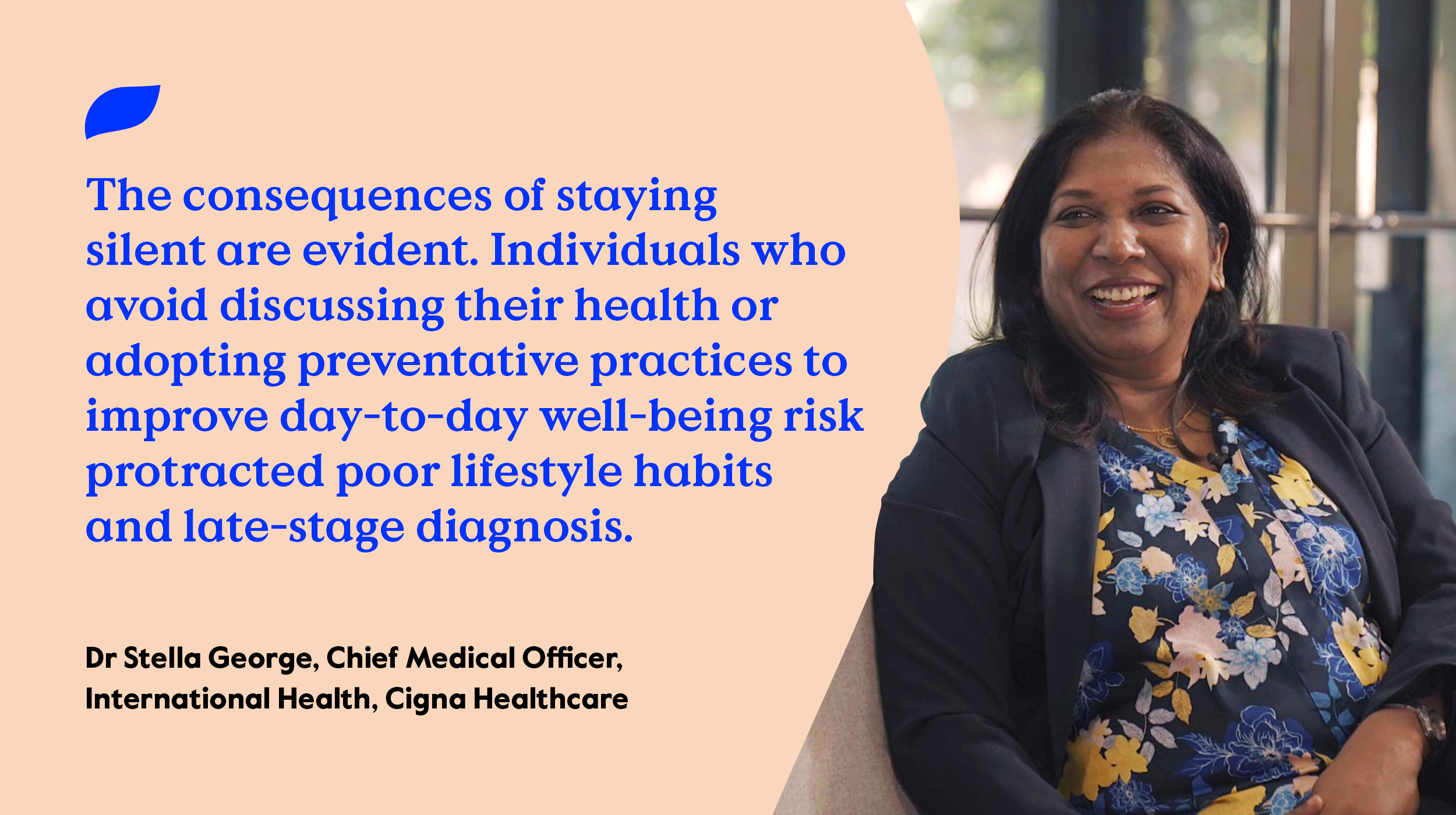
Either way, the consequences of staying silent are evident. Individuals who avoid discussing their health or adopting preventative practices to improve day-to-day well-being risk protracted poor lifestyle habits and late-stage diagnosis for any number of chronic and life-altering conditions which leave many people languishing in pain or in hospital beds.

Talking Breaks Barriers and Increases Access to Care
Overcoming this public health challenge will take time and persistence from everyone in the health community.
Public health educational campaigns, targeting individuals and healthcare providers, can help break down taboos, provide accurate information, debunk myths and promote open conversations.
Training healthcare professionals to initiate discussions about difficult conditions will encourage more regular GP check-ups. Peer-to-peer platforms, forums, and counselling services can offer emotional support, validation, and guidance, reducing the isolation experienced by individuals with specific health conditions. And the media must encourage accurate and empathetic portrayals of individuals with all health conditions, breaking down those societal barriers and promote understanding.
By acknowledging the importance of having an open dialogue, understanding the risks associated with silence, and eradicating social barriers such as stigma, we can foster a healthier and more supportive society.
This is what the Let’s Talk About… series sets out to do.